

Defamation
Social Media Defamation Lawyers in Melbourne
A single post or a one-star review can do more damage to you than a newspaper article ever did. We act fast on social media defamation across Victoria, from concerns notice through to settlement or court.
- Free initial advice
- Senior lawyer on every file
- 24/7 availability
Has someone defamed you online? You may have a year, but the clock starts now.
A single post or a one-star review can do more damage to you than a newspaper article ever did. We act fast on social media defamation across Victoria, from concerns notice through to settlement or court.
A post can do more damage than a newspaper used to
A single Facebook post seen by 200 mutual friends can cost you a job offer. A one-star Google review left on your business listing can cost you customers for years. The law puts online publication on the same footing as a newspaper, and it hands you a formal weapon: the concerns notice every publisher must be served with before you can sue.
That same framework gives you real options. A lawyer-drafted concerns notice removes most posts within the 28-day response window, and where it does not, you have a clear path to damages.
If you have been defamed online in Victoria, take your screenshots and then call MK Law on 1800 130 120 today, or use the form on this page.
Save the evidence before anything else
Before you do anything, capture what was said.
- Full-page screenshots, with the URL bar visible and the timestamp showing
- The poster’s profile page and any handles or display names used
- Comments, likes and shares (these show audience size, which matters for damages)
- For Instagram stories or Snapchat, screen-record before they disappear
- Any private messages where the poster repeats the claim
Do not contact the poster directly until you have a lawyer involved. Engaging publicly is the single most common way people make their own case worse.
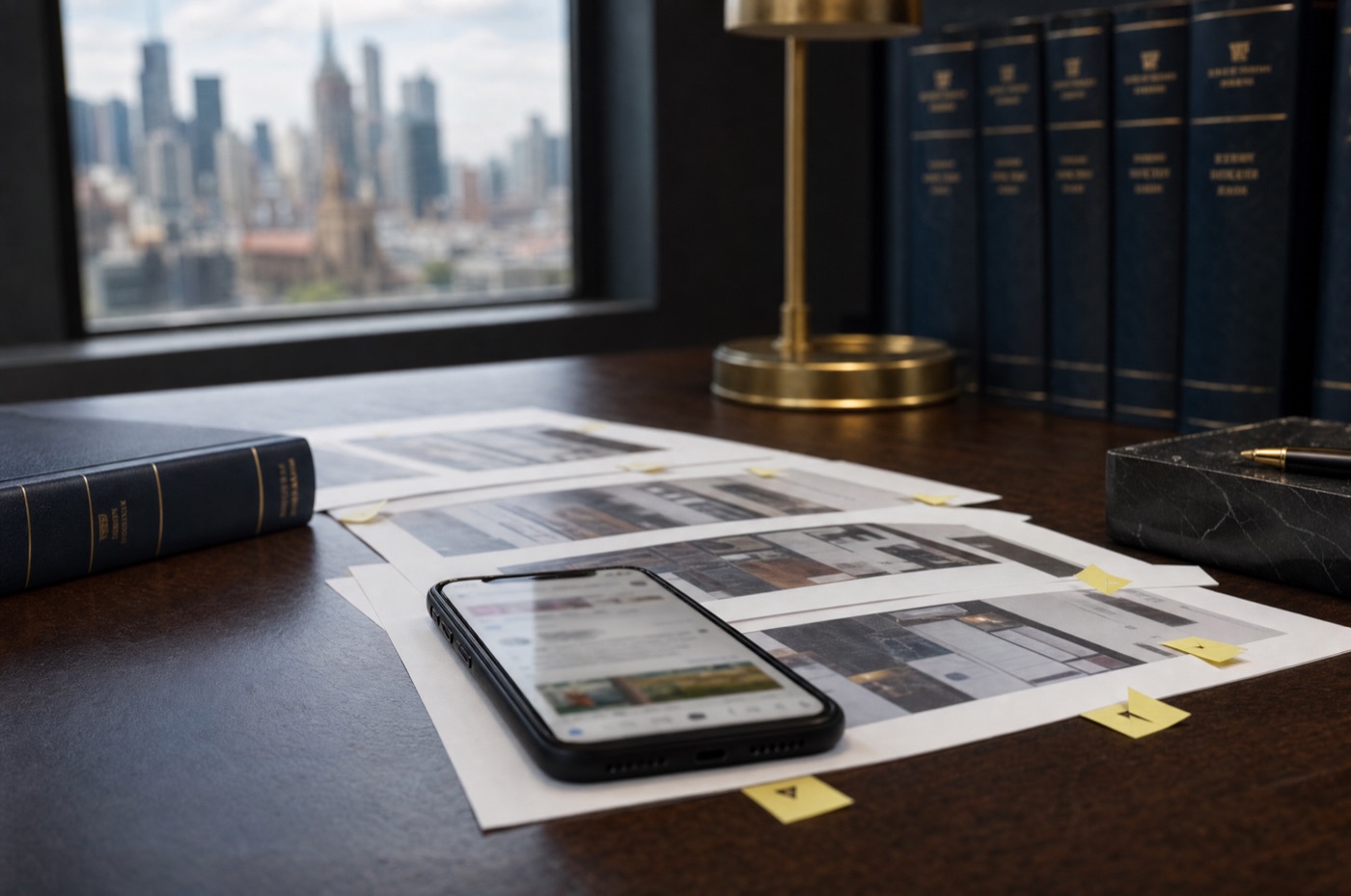
Your screenshots become the case file
The evidence you capture in the first hour usually decides how strong the concerns notice can be. Bring us the screenshots, the profile, and the names of anyone who saw the post, and we turn them into particularised imputations the publisher has to answer within 28 days. If something is missing, we tell you exactly what to preserve before it disappears.
What counts as defamation online
Four things have to line up.
The material has to be published to someone other than you. A direct message sent to you alone is not defamation, but the moment a third person sees it, the test is met.
You have to be identifiable from it, even where you are not named. A post about “the dentist on Glenferrie Road with the red door” is enough if your friends know who that is.
The material has to be defamatory, meaning it lowers your reputation in the eyes of an ordinary reasonable person. Calling someone a thief, a fraud, a cheat, or unsafe to be around almost always qualifies. Attacks pitched at the person rather than the product are what most people mean by defamation of character, and a post carries them further in a day than a rumour used to travel in a year.
And the publication has to have caused, or be likely to cause, serious harm. For businesses, that means serious financial loss. For individuals, it can be measured in lost work, broken relationships, or documented distress.
The concerns notice (this is where most matters end)
You must serve a concerns notice before you can file in court. The notice sets out the publication, the imputations you say it carries, and the harm. The other side has 28 days to respond.
A well-drafted concerns notice with a lawyer’s signature works on several fronts at once. It puts the platform on notice, which often means the platform removes the post itself. Where the other side has an insurer, it triggers that too. And it opens the door to an “offer to make amends”, a formal peace offering that ends the matter if it is fair and you accept it. That first lever has sharpened since Victoria brought in its rules for digital intermediaries, described in defamation law in Australia: a host that sits on a complaint for more than seven days can lose the defence it was counting on.
Most concerns notices we send get a result inside the 28-day window: the post comes down, an apology goes up, or a payment is offered. Court is where the small stubborn minority of matters end up. Our defamation lawyers act for publishers as often as for the people they defamed, so we can usually tell you what your poster will do the moment the notice arrives.
A furious public reply feels good for an hour and costs you for a year. The clients who come out of these matters best are the ones who went quiet, captured everything, and let the concerns notice do their talking for them.
MK Law Group
What you can recover
Damages for defamation are capped at $520,000, indexed each July, for non-economic loss. Aggravated damages can sit on top where the publisher acted maliciously or refused to take the post down. Businesses can also recover proven financial loss.
You may also obtain an injunction preventing further publication, a court-ordered apology, and a contribution to your legal costs. What we push for is the outcome that actually helps you, which usually means getting the post down quickly, a clear retraction, and a payment that reflects the harm done.
What about anonymous trolls?
We can usually find them. Court orders forcing the platform to hand over account details will unmask most anonymous posters, and where they do not, subpoenas on payment records and forensic IP traces generally finish the job. Once we know who it is, the same concerns notice process applies. When the trail leads back to a colleague, the posts almost always turn out to be one part of a longer pattern, and a workplace bullying application gives you a second route that can stop the behaviour without you leaving the job.
Talk to a Melbourne defamation lawyer today
Call 1800 130 120 or use the form on this page. We answer evenings and weekends because we know how fast a post can spread before anyone gets around to office hours.
Legal Information
Talk to a lawyer before the next step

Meet the firm
Michael Kuzilny
Founder & Principal, MK Law Group
Michael has been working in the Victorian legal system since 1986. MK Law Group acts for individuals, family businesses, and commercial clients across Melbourne, with a senior lawyer on every file from the first call.
"We take on the matters we know we can run well, and we are direct about the ones we cannot."
- Practising in Victoria since 1986
- Senior lawyer on every file from day one
- Free initial advice on every new matter
Testimonials
Real reviews from real clients
Verified client reviews appear here. Want to leave one?
Share your experienceFAQs
Frequently asked questions
-
Do defamation laws apply to Facebook, Instagram, X, and Google reviews?
Yes. Anything published to a third party can be defamatory, including private group posts, public comments, paid reviews and stories that disappear after 24 hours (we take screenshots first). The law treats online publication exactly the same as print.
-
How long do I have to bring a claim?
One year from the date of publication in Victoria. The court can extend it in limited cases, but assume the year is firm. Reposts and republications can restart the clock for that new publication.
-
Do I have to prove serious harm?
Yes. You need to show the publication caused, or is likely to cause, serious harm to your reputation. Business plaintiffs need to show serious financial loss. Most online attacks meet this test once you collect the right evidence.
-
Can I get the post taken down?
Often yes. A well-drafted concerns notice signed by a lawyer routinely produces a takedown without going to court. Where it does not, we apply for an injunction in the Supreme Court.
-
How much does it cost to sue for defamation?
The first call is free, and it is where we scope your matter with you. The cost after that turns on how far the publisher makes it run: most online matters end at the concerns notice stage, and only the rare stubborn one goes near a courtroom. You decide before every stage, never after it.
- 30+
- Years in Victorian civil work
- 1,500+
- Files run end-to-end
- 4.7
- Average Google rating
- 24/7
- Free initial advice
Be in touch
Talk to a Melbourne civil lawyer today
Free first call. Honest assessment. No obligation. Reach us by phone, email, or the form below.
- marcus@mklawfirm.com.au
- 1800 130 120
- 2/212 Barkly Street, St Kilda VIC 3182