

Building Dispute Lawyers in Melbourne
Building disputes are won on the contract and the timeline. We act for homeowners, builders, owners corporations and developers across Building and Plumbing Commission conciliation, VCAT, the County Court and the Supreme Court of Victoria.
- Free initial advice
- Senior lawyer on every file
- 24/7 availability
Free initial advice from senior lawyers
In a building dispute? Save every photo and email, then call a lawyer before you write back.
Building disputes are won on the contract and the timeline. We act for homeowners, builders, owners corporations and developers across Building and Plumbing Commission conciliation, VCAT, the County Court and the Supreme Court of Victoria.
Areas we run
MK Law represents clients across Victoria on the following matters
Building disputes are won on the contract and the timeline
Every winnable building dispute looks the same on day one. There is a written building contract, dated photographs, a paper trail of variations and emails, and a clear record of what was paid and when. Owners and builders who keep that record settle for fair money. Those who don’t end up arguing in VCAT about who said what on the back deck eighteen months ago.
If you are in a building dispute in Victoria, call MK Law on 1800 130 120 today. The first call is free.
In building disputes the documents win, not the volume of the argument. The owner with the dated photos, the signed variations and the email trail beats the party relying on memory. Before you fire off a letter or a termination notice, get the file in front of a lawyer who knows how VCAT reads it.
Domestic building disputes under the DBCA
The Domestic Building Contracts Act 1995 (Vic) governs almost every residential build, renovation and extension in Victoria. It requires a written contract for any domestic building work over $10,000, sets out the statutory warranties owners receive, regulates progress payments, and gives owners specific termination rights when builders breach the contract.
Most domestic building disputes start at the free government conciliation service that screens matters before the tribunal. It used to be Domestic Building Dispute Resolution Victoria (DBDRV) and now runs inside the Building and Plumbing Commission. By law you first have to take reasonable steps to resolve the dispute yourself: contact the other party, set out your concerns in writing, and give them a real chance to respond. Conciliators can issue dispute resolution orders, and they can certify the matter for VCAT if conciliation fails. Building owners, builders, subcontractors, architects and surveyors are all eligible to apply.
VCAT’s Building and Property List hears the bulk of domestic building work disputes. For larger claims, or where the dispute involves complex commercial parties, the County Court of Victoria and the Supreme Court of Victoria take jurisdiction. Construction law in Victoria sits across all of these forums, plus the Building Appeals Board for surveyor and building-order matters.
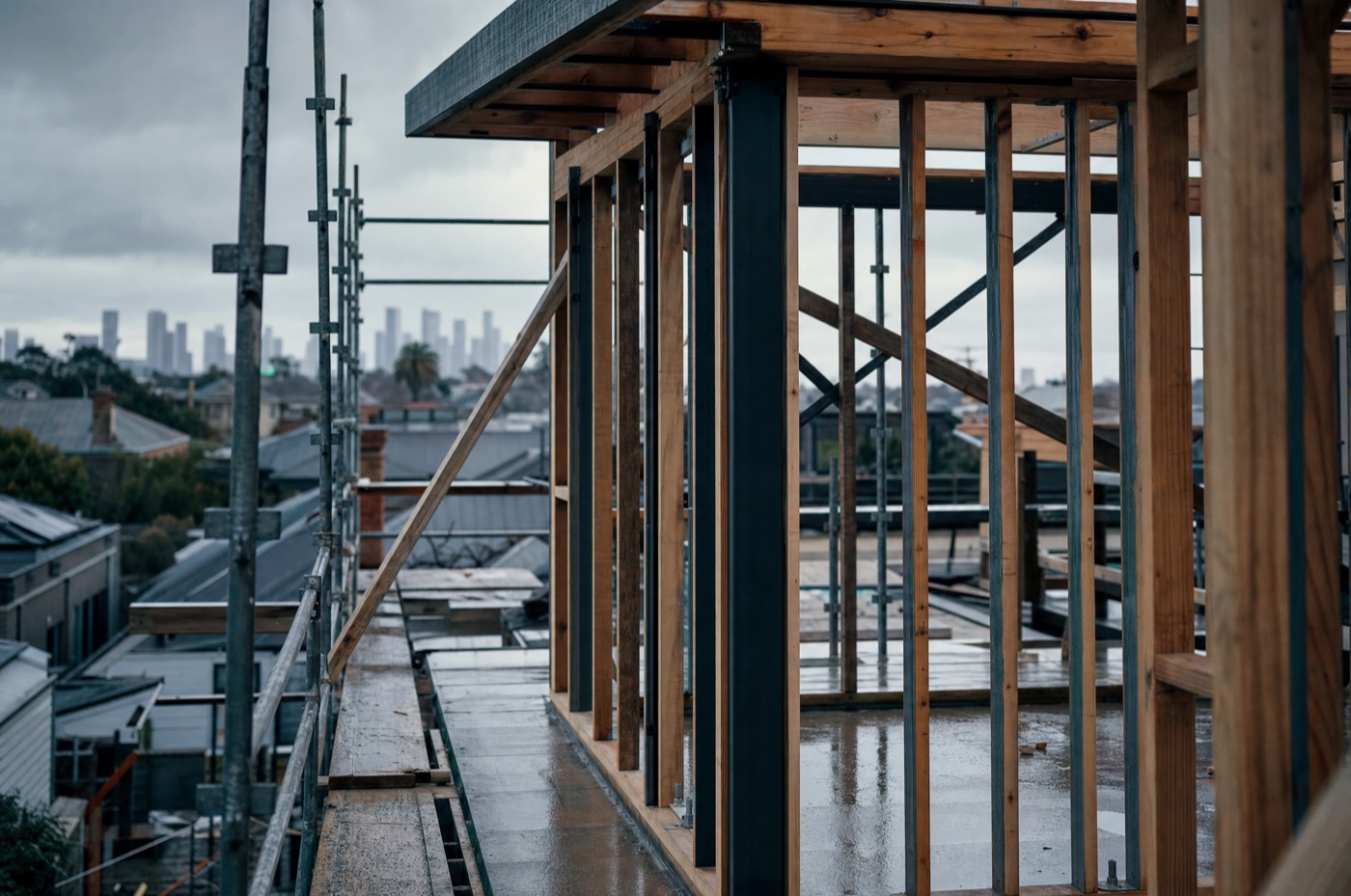
Defective work is proved on evidence, not frustration
Cracking, water ingress, slab heave, failed waterproofing and non-compliant cladding are the defects we run most. A defect claim is only as strong as the expert report behind it, so the first job is getting an independent building inspector or engineer through the site while the evidence is fresh. We then plead the statutory warranties under section 8 of the DBCA, particularise each defect, and price the rectification. Owners who call before the builder has left site keep far more options open than those who wait until the warranty letters bounce.
The five disputes we run most weeks
Most building work that lands on our desk falls into one of five fact patterns.
Defective and incomplete work. Cracking, water ingress, slab heave, non-compliant waterproofing, plumbing that fails the audit, structural defects picked up by a private building inspector or surveyor. These claims rely on expert evidence and a careful pleading of the statutory warranties.
Delays and liquidated damages. Build periods blow out. The building contract usually sets a date for practical completion and a daily rate of liquidated damages. We act for owners chasing delay damages and for builders defending claims by relying on extension-of-time clauses, qualifying causes and superintendent decisions.
Variation disputes. Section 38 of the DBCA sets strict rules for variations. A variation that was not requested in writing, costed in writing, and signed off by the owner is usually not recoverable. Builders routinely lose six-figure variation claims on this point alone.
Progress claim disputes. When a progress claim is disputed, money stops. Cash flow problems escalate to suspension of work, termination, and counterclaims. Security of Payment is often the fastest way to get paid.
Termination and builder walk-offs. Wrongful termination is one of the most expensive mistakes in domestic building. Before any termination notice is served, the grounds, the notice, and the timing all need to be right. Get a lawyer on the phone before the email is sent.
Outside those five sits whatever an incident on site leaves behind. A construction accident puts indemnity clauses, insurance policies and stop-work delay costs in play at once, and that argument runs on its own track beside any defect claim already on foot.
The cheapest building dispute is the one that settles at conciliation. The expensive ones are the variation claims and the termination notices that went out before anyone read the contract.
MK Law Group
Security of Payment is fast and brutal
The Building and Construction Industry Security of Payment Act 2002 (Vic) gives anyone working under a construction contract a quick path to payment.
A payment claim is served on the principal. The principal has ten business days to serve a payment schedule setting out what they propose to pay and why. If no schedule comes back, the entire claim becomes payable. If the schedule disputes the amount, the claimant can refer the dispute to an adjudicator who decides the matter inside about a month, far faster than litigation in any court or tribunal.
The timeframes are unforgiving. A day late on the payment schedule is a day too late. Builders, subcontractors and consultants who run their books on Security of Payment get paid faster than anyone else in the industry. We draft and respond to payment claims, payment schedules and adjudication applications across Victoria.
Residential and commercial building disputes
Residential disputes run through the DBCA and, in most cases, Building and Plumbing Commission conciliation before VCAT. Commercial building and construction disputes turn instead on the negotiated contract: the dispute resolution clause usually steps the parties through negotiation, then mediation or expert determination, then arbitration or court. We act for property developers, head contractors, subcontractors, engineers, architects and owners corporations on both sides of that line.
Owners corporation disputes deserve their own mention. Defects in common property, water damage between lots and disagreements over who funds rectification are a constant source of litigation. We act for owners corporations and individual lot owners, and coordinate the building claim with the owners corporation’s obligations under the relevant Victorian legislation.
What happens if the builder is insolvent
Builder insolvency is the worst outcome for an owner who is mid-build. The site stops, subcontractors walk, and unpaid progress claims become a queue behind the secured creditors.
Builder insurance is the real remedy for a homeowner, and the cover you hold depends on when you signed. A contract signed from 1 July 2026 falls under the first-resort Home Warranty Scheme, run by the Building and Plumbing Commission. It picks up work over $20,000, has a $400,000 limit, and you can claim for incomplete or defective work without waiting for the builder to collapse. A policy issued before that date is last-resort cover through the VMIA. It picks up work over $16,000 to a $300,000 limit, and you can only claim once the builder has died, disappeared, become insolvent or had their registration cancelled. Deadlines are tight either way, and insurers will look for a reason to decline, so get the claim moving early. We run claims under both schemes.
For builders facing a principal that has gone under, recovery usually runs through proofs of debt, retention release claims, and where security exists, calls on bank guarantees. Our insolvency lawyers work alongside the building team where a counterparty has collapsed.

A payment claim done right gets you paid in weeks
Security of Payment rewards the party who moves first and gets the paperwork right. A payment claim served under the 2002 Act starts a ten business day clock: if the principal fails to serve a payment schedule in time, the whole amount falls due and you can recover it as a debt. Where the schedule short-pays you, adjudication puts the dispute in front of an independent adjudicator who decides it inside about a month. We prepare and respond to claims, schedules and adjudication applications for builders, subcontractors and consultants across Melbourne.
Where we appear
We provide legal representation in VCAT’s Building and Property List, the Building Appeals Board, the County Court of Victoria and the Supreme Court of Victoria. Most matters end at conciliation, a compulsory conference or mediation. A small number run to a contested hearing, and when they do, the same lawyers who drafted your first letter to the builder are the ones at the bar table.
Got a defect report, a payment claim or a termination notice in front of you?
One free call tells you whether you are looking at conciliation, VCAT or Security of Payment, what the deadlines are, and what each path is likely to cost.
What it costs
The first call is free, and we scope your matter on it. After that, cost follows the forum, how far the matter runs, and how much expert evidence it needs. A file that settles at conciliation costs a fraction of a contested VCAT hearing with duelling experts.
If you want a plain-English overview before you call, read our building disputes guide. For the wider picture across related civil matters, see our civil lawyers in Melbourne hub.
Talk to a Melbourne building dispute lawyer today
Call 1800 130 120 or use the form on this page. We answer evenings and weekends because Security of Payment deadlines do not wait for office hours.
Don't wait. Every minute counts.
Get immediate legal support
Speak with a senior building disputes lawyer today. First call is free.
1800 130 120-
Free first call
-
Confidential intake
-
Senior lawyer on every file
-
24/7 availability

Meet the firm
Michael Kuzilny
Founder & Principal, MK Law Group
Michael has been working in the Victorian legal system since 1986. MK Law Group acts for individuals, family businesses, and commercial clients across Melbourne, with a senior lawyer on every file from the first call.
"We take on the matters we know we can run well, and we are direct about the ones we cannot."
- Practising in Victoria since 1986
- Senior lawyer on every file from day one
- Free initial advice on every new matter
Testimonials
Real reviews from real clients
Verified client reviews appear here. Want to leave one?
Share your experienceFAQs
Frequently asked questions
-
What types of building issues give rise to a dispute?
Most building disputes fall into a handful of patterns: defective or incomplete building work, delays past the date for practical completion, variation claims that were never costed in writing, disputed progress claims, and wrongful termination. Water ingress, slab heave, non-compliant waterproofing and cladding are the defects we see most. Each turns on the contract, the statutory warranties and the paper trail, so the earlier you get legal advice the stronger your position.
-
What is DBDRV and how does it work?
Domestic Building Dispute Resolution Victoria was the free government conciliation service that almost every domestic building dispute had to pass through before VCAT. Since 1 July 2025 the same service has run inside the Building and Plumbing Commission, and the process has not changed. Building owners, builders, subcontractors, architects and surveyors can all apply. By law you first have to take reasonable steps to resolve the dispute yourself, which means writing to the other party and giving them a real chance to respond. A conciliator can issue a dispute resolution order, or certify the matter for the tribunal if conciliation fails.
-
How long does a VCAT building matter take?
Files that settle at a compulsory conference or mediation can finish within months, but a contested domestic building matter in the Victorian Civil and Administrative Tribunal commonly takes around a year from filing to a final hearing, and complex defect claims with expert evidence run longer. Before you file you usually need a certificate of conciliation from the Building and Plumbing Commission (formerly DBDRV), which adds another two to three months to the timeline.
-
What happens if my builder goes insolvent?
If the builder enters liquidation or administration, your contract claims become an unsecured debt and rarely pay much. Builder insurance is the real remedy, and which scheme you fall under depends on the date you signed. For a contract signed from 1 July 2026 the first-resort Home Warranty Scheme run by the Building and Plumbing Commission covers work over $20,000 up to a limit of $400,000, and you can claim on it without waiting for the builder to go under. An older policy is last-resort cover: work over $16,000 is covered up to $300,000, but only once the builder has died, disappeared or become insolvent. Both regimes have strict notification deadlines, so call as soon as you hear the builder is in trouble. For the company-side process, see our page on builder liquidation.
-
What is a payment claim under Security of Payment?
A payment claim is a formal written demand for money owed under a construction contract, served under the Building and Construction Industry Security of Payment Act 2002 (Vic). The other side has ten business days to respond with a payment schedule. Miss the deadline and the full claim becomes payable. Adjudication of disputed claims is fast, often decided within weeks rather than the months litigation takes.
-
What is the warranty period for domestic building work?
Statutory warranties under section 8 of the Domestic Building Contracts Act 1995 (Vic) run for ten years from the date of completion. They cover workmanship, materials, fitness for purpose and compliance with the law. Structural defects discovered inside that decade are usually recoverable, even by a later owner who bought the house second-hand.
-
Can I terminate my building contract?
Sometimes, but the risk is high. Wrongful termination by an owner can leave you liable for the builder's lost profit and the cost of rectification elsewhere. The Domestic Building Contracts Act 1995 (Vic) gives owners specific termination rights in limited circumstances, and the building contract itself sets out grounds for default. Get legal advice before you send a termination notice, not after.
-
Do I need a lawyer for a building dispute?
You can lodge a conciliation application yourself, and many owners do. The point where legal representation earns its keep is when expert reports start landing, a payment claim has a deadline running, or the matter is certified for VCAT. A building dispute lawyer pleads the statutory warranties correctly, manages the expert evidence, and keeps you off the procedural traps that sink otherwise good claims. The first call with our law firm is free.
Be in touch
Talk to a Melbourne civil lawyer today
Free first call. Honest assessment. No obligation. Reach us by phone, email, or the form below.
- marcus@mklawfirm.com.au
- 1800 130 120
- 2/212 Barkly Street, St Kilda VIC 3182