

Building Disputes
Domestic Building Dispute Lawyers in Melbourne
Your home build is protected by ten-year statutory warranties, strict contract rules and compulsory builder insurance. We turn those protections into money and rectified work, from conciliation through to VCAT.
- Free initial advice
- Senior lawyer on every file
- 24/7 availability
Builder gone quiet or the defects piling up? Photograph everything today, then call before you send another email.
Your home build is protected by ten-year statutory warranties, strict contract rules and compulsory builder insurance. We turn those protections into money and rectified work, from conciliation through to VCAT.
The law is on your side, if you use it properly
Your renovation has stalled, the plaster is staining, or the builder wants money for work you never agreed to. You are in a stronger position than it feels like from where you are standing. Almost every home build, extension and renovation in Victoria sits under the Domestic Building Contracts Act, and the Act was written to protect you.
It requires a written contract for domestic building work over $10,000, and gives you a cooling-off period of five business days after you receive the signed contract. It also bakes statutory warranties into your contract whether the builder likes it or not: the work must be carried out with care and skill, with suitable materials, in line with the plans and the law, and fit for its purpose. Those warranties last ten years and follow the house rather than the owner. Because they sit inside the contract itself, work that falls short of them can be pursued as a breach of contract as readily as a building defect.
If any of that sounds like your situation, call MK Law on 1800 130 120 before you fire off another angry email. The first call is free, and what you write to the builder this week can decide the case.
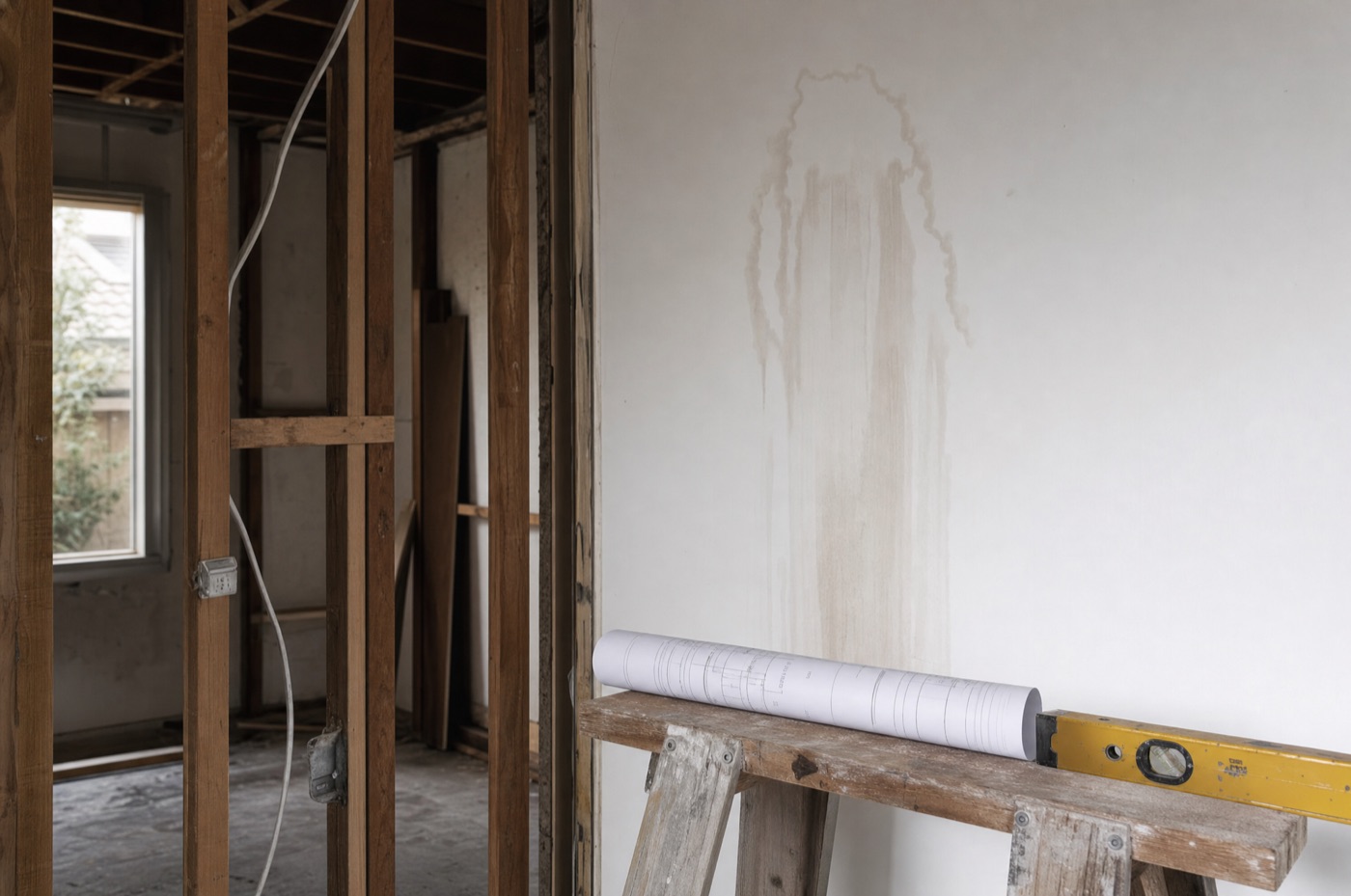
Defects are proved with evidence gathered early
Dated photographs, the signed contract, every email and text, and an independent building inspection report: that is the file that wins a defect claim. We arrange the right expert for the defect you have, plead the statutory warranties properly, and price the rectification so the claim asks for the right number. Owners who build the file before the builder leaves site tend to settle faster and for more.
Conciliation comes first, and how you get there matters
You cannot go straight to VCAT with most domestic building disputes. The government conciliation service, formerly Domestic Building Dispute Resolution Victoria (DBDRV) and now run by the Building and Plumbing Commission, screens them first. It is free, and before it accepts your application you must show you took reasonable steps to resolve things directly with the builder, in writing.
That first letter is worth doing well. We draft it so it gives the builder a genuine chance to fix the work, puts the statutory warranties on the record, and reads properly when a conciliator or tribunal member sees it later. If conciliation resolves the dispute, you are done cheaply. If it fails, the service certifies the matter and the certificate opens the door to VCAT’s Building and Property List. Plan on around a year to reach a final hearing there: complex defect claims with expert evidence run longer, and many matters settle earlier at a compulsory conference.
The ten-year clock does not bend
Victorian law puts a hard ten-year limit on building actions, counted from the occupancy permit or certificate of final inspection. It applies to contract and negligence claims alike, and there is no exception for defects that stayed hidden. If your home is in year eight or nine, treat this as urgent.
Builder insurance changed on 1 July 2026
If your contract was signed from 1 July 2026 and your home is three storeys or less, the new first-resort Home Warranty Scheme applies. The Building and Plumbing Commission insures work over $20,000 up to $400,000, and you can claim for incomplete, defective or non-compliant work straight away.
Older policies stay under the last-resort rules: cover up to $300,000 for work over $16,000, and you can only claim once the builder has died, disappeared or become insolvent. If your builder has collapsed mid-build, that policy plus our builder liquidation team is usually your path to recovery. Either way, notification deadlines are tight, so do not sit on the letter.
Every domestic building claim in Victoria dies at the ten-year mark
One free call tells you which insurance regime covers your build, whether conciliation or VCAT is the right forum, and what your claim is realistically worth.
What we do on your file
We act for owners, and for builders defending claims, across building disputes of every size. On a typical owner file we review the contract and the paper trail, brief the building inspector, run the conciliation process, and take the matter into VCAT’s Domestic Building List if conciliation fails. You know what each stage involves before it starts, and nothing moves without your say-so.
Not every home file is about workmanship. When an excavation cracks the neighbour’s wall or WorkSafe shuts the site down, the construction accident questions of indemnity and insurance sit alongside the building claim, and we run the two together.
Call 1800 130 120 or use the form on this page. If you just want to understand the process first, our building disputes guide walks through it step by step.
Legal Information
Talk to a lawyer before the next step

Meet the firm
Michael Kuzilny
Founder & Principal, MK Law Group
Michael has been working in the Victorian legal system since 1986. MK Law Group acts for individuals, family businesses, and commercial clients across Melbourne, with a senior lawyer on every file from the first call.
"We take on the matters we know we can run well, and we are direct about the ones we cannot."
- Practising in Victoria since 1986
- Senior lawyer on every file from day one
- Free initial advice on every new matter
Testimonials
Real reviews from real clients
Verified client reviews appear here. Want to leave one?
Share your experienceFAQs
Frequently asked questions
-
Do I have to go through conciliation before VCAT?
For most domestic building work disputes, yes. The government conciliation service, formerly Domestic Building Dispute Resolution Victoria (DBDRV) and now run by the Building and Plumbing Commission, screens matters before the tribunal, and VCAT will generally want a certificate showing conciliation was attempted. Before the service accepts your application you must show you took reasonable steps to sort it out directly, which means raising the problem with the builder in writing and giving them a chance to respond. We draft that first letter so it does double duty: it gives the builder a real chance to fix things, and it sets up your certificate if they refuse.
-
How long do I have to sue my builder?
Ten years from the date of your occupancy permit or certificate of final inspection. The courts apply this strictly: even a hidden defect that only shows itself in year eleven is out of time. If your home is approaching the ten-year mark and you suspect a structural problem, get an inspection and legal advice now, because once the date passes there is no extension.
-
I bought the house after it was built. Can I still claim against the builder?
Usually, yes. The statutory warranties attach to the building work, not to the person who signed the contract. A later owner can enforce them against the original builder for defective workmanship, faulty materials or non-compliant work, as long as the claim starts inside the ten-year limitation period. Bring your section 32 statement, the occupancy permit and any inspection reports to the first call.
-
My builder is charging for a variation that was never put in writing. Do I have to pay?
Often not. Victorian law sets strict rules: a variation generally needs to be requested in writing, priced in writing and signed off before the work is done. Builders who skip the paperwork routinely lose the right to recover the extra cost, except in limited cases where VCAT considers it fair to allow it. Send us the contract and the invoices before you pay anything.
-
What changed with builder insurance on 1 July 2026?
A lot. Contracts signed from 1 July 2026 for homes up to three storeys sit under the new first-resort Home Warranty Scheme run by the Building and Plumbing Commission. It applies to work over $20,000, covers up to $400,000, and lets you claim for incomplete, defective or non-compliant work without waiting for the builder to die, disappear or go broke. Policies issued before that date keep the old rules: last-resort cover up to $300,000 for work over $16,000, claimable only once the builder is dead, missing or insolvent, with six years of cover for structural defects and two for non-structural. Which regime you fall under changes your whole strategy, so tell us your contract date on the first call.
-
What does a domestic building dispute cost to run?
That depends on how far the builder makes you go. Conciliation is a free government service and many matters end there, which is the cheapest exit available. Beyond that, the cost drivers are the number of defects, whether expert reports are needed, and whether the matter runs all the way to a VCAT hearing. The first call is free, and on it we tell you honestly whether the claim is worth running and what the first step involves.
- 30+
- Years in Victorian civil work
- 1,500+
- Files run end-to-end
- 4.7
- Average Google rating
- 24/7
- Free initial advice
Be in touch
Talk to a Melbourne civil lawyer today
Free first call. Honest assessment. No obligation. Reach us by phone, email, or the form below.
- marcus@mklawfirm.com.au
- 1800 130 120
- 2/212 Barkly Street, St Kilda VIC 3182